Gas Tank Water Heaters
Fast recovery and dependable performance for homes already equipped with natural gas or propane.
Get dependable hot water with honest guidance on gas and electric tank systems. We repair existing units, right-size replacements, and install 40-, 50-, and high-capacity models for Temple homes.

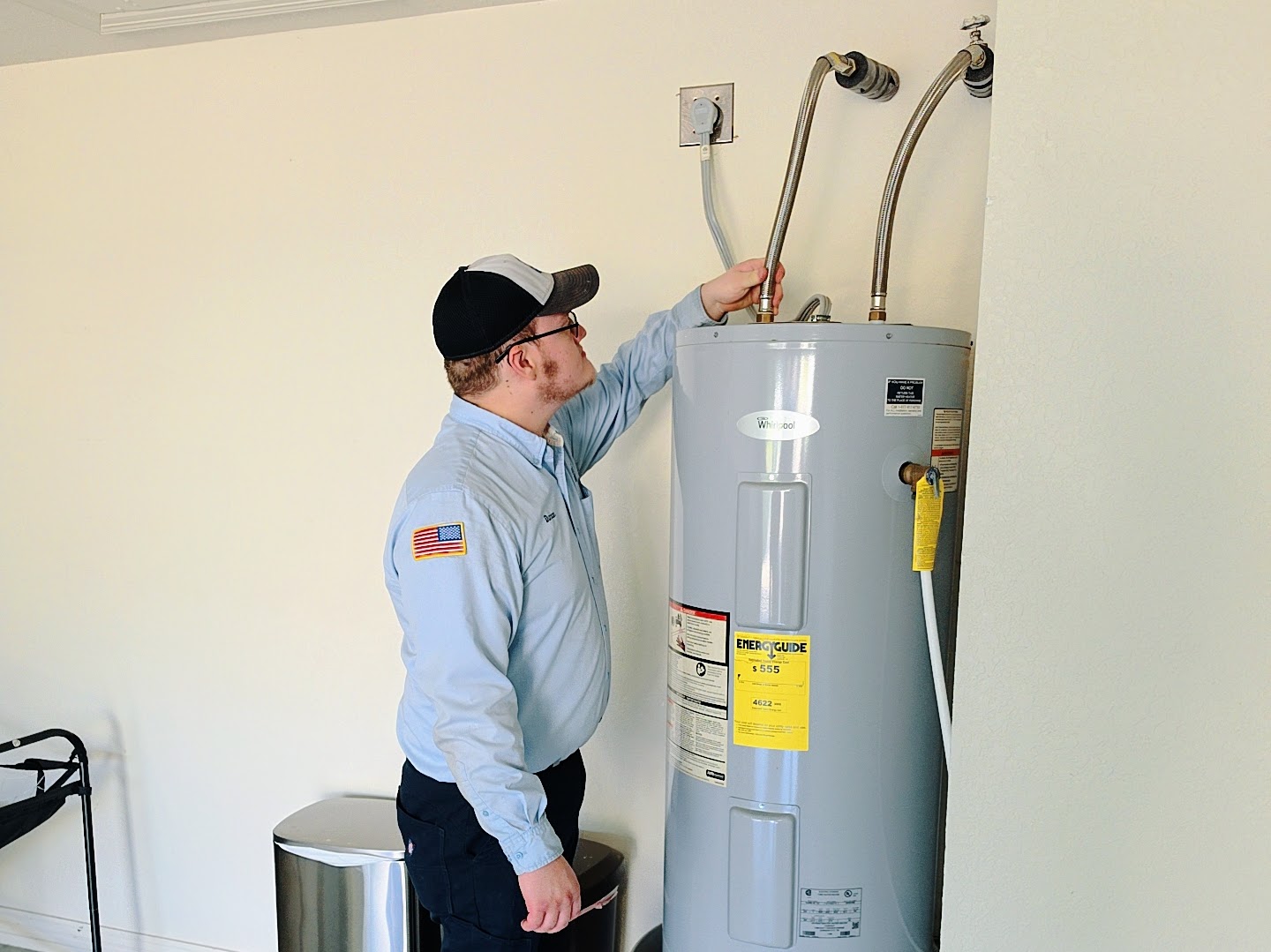
Patriot Plumbing Service repairs, replaces, and installs gas and electric tank water heaters. We evaluate household demand, recovery rate, available space, and existing connections before recommending the right capacity.
Fast recovery and dependable performance for homes already equipped with natural gas or propane.
A straightforward option for many Temple homes, with clean installation and familiar system requirements.
Peak use, recovery rate, efficiency, water hardness, and future needs matter—not just household size.
.png)
Tank size should reflect your home’s real hot-water demand - not household count alone. A 40 gallon water heater is often a good fit for smaller households, a 50 gallon water heater works well for many families, and a 50 gallon + tank booster can help support heavier daily use.
This guide is a practical starting point. Final sizing should be confirmed after evaluating your home, existing connections, and peak hot-water demand so you get dependable capacity without paying for more water heater than you need.
Traditional tank systems remain a trusted solution for homeowners who value dependable recovery, familiar maintenance, and practical long-term ownership.
A ready supply of hot water supports everyday showers, laundry, dishes, and predictable household routines.
Straightforward components and widely understood service requirements make ongoing care easier to plan.
A properly sized tank system can deliver reliable comfort with a practical upfront installation investment.
Many performance problems can be corrected by replacing a water heater thermostat, heating element, anode rod, drain valve, thermocouple, or gas control valve.
Small changes can signal a larger problem. A professional evaluation can help protect your home and prevent an unexpected loss of hot water.
Water temperature fluctuates or runs cold sooner than usual.
Discolored hot water may point to corrosion developing inside the tank.
Moisture near the water heater should always be evaluated promptly.
Popping, rumbling, or banging can indicate sediment buildup.
An aging system may use more energy to deliver the same amount of hot water.
Repeated repairs may mean the system is approaching the end of its useful life.
Not every warning sign means replacement. Start with clear answers.
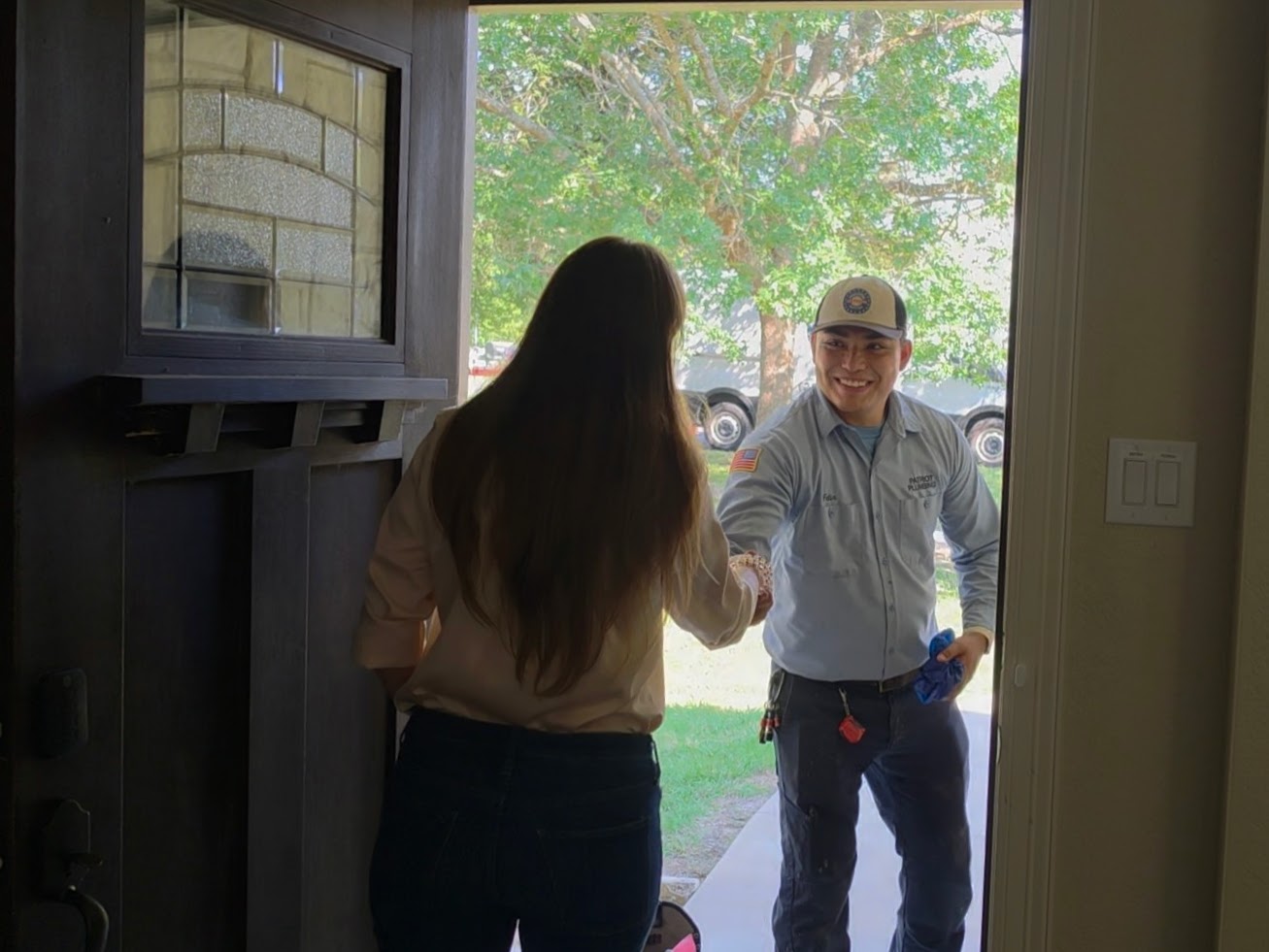
Schedule an EvaluationFrom your first call through final cleanup, our team keeps you informed and helps make your water heater service straightforward and stress-free.
Call our office or request service online. We’ll gather the basic details and arrange a convenient appointment.
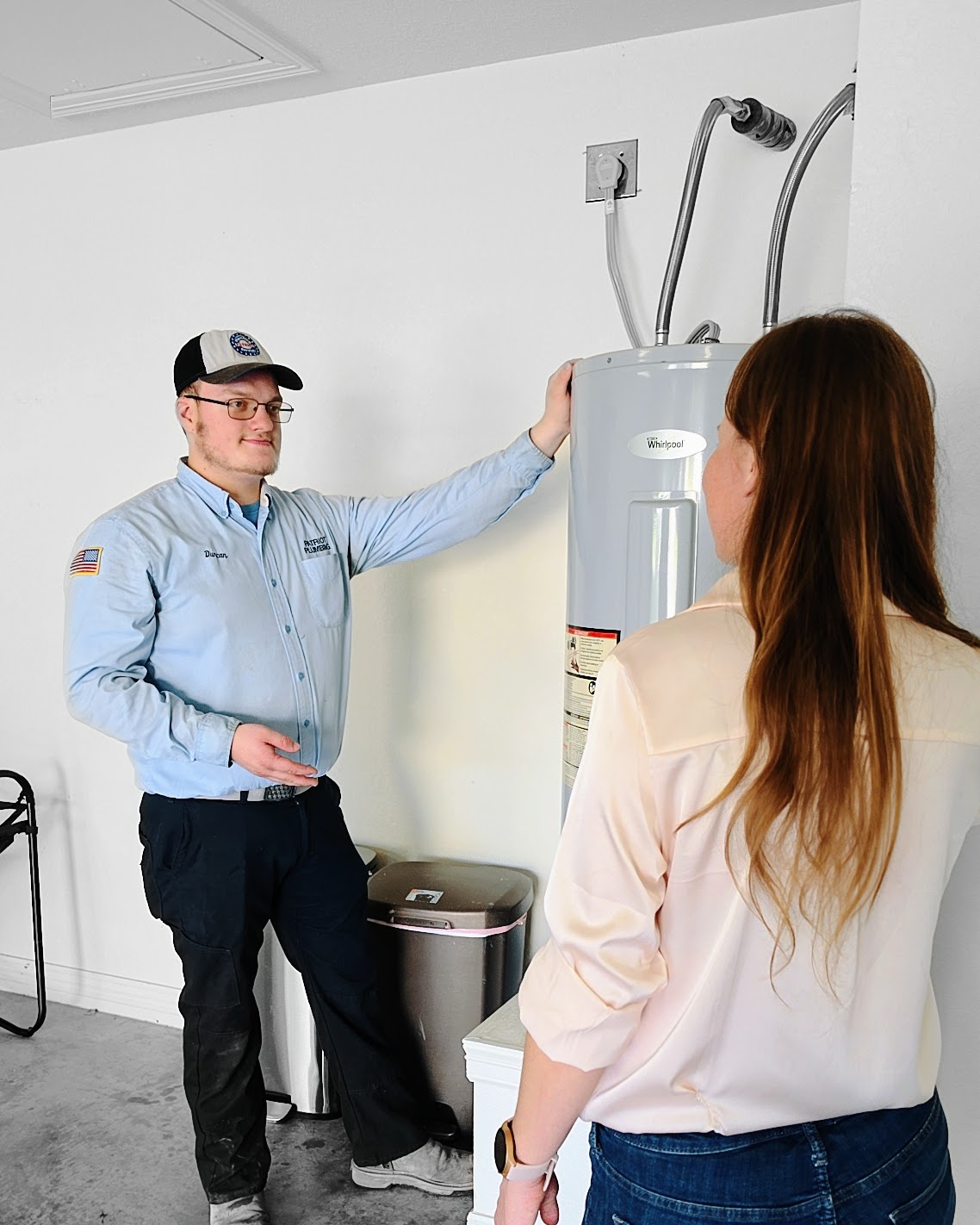
A licensed Patriot plumber will inspect your current water heater, answer your questions, and identify the best solution for your home.
You’ll receive honest recommendations and upfront pricing before any work begins, so you can make an informed decision.
We complete the installation according to current plumbing codes using quality materials and proven installation practices.
Before we leave, we’ll test the system, clean the work area, and make sure you’re comfortable operating your new water heater.
Your installation is backed by our workmanship warranty, and we’re here if you have questions after the job is complete.
Many conventional tank water heaters last about 8 to 12 years. Actual service life depends on water quality, maintenance, installation conditions, tank construction, and household demand. Rust, recurring repairs, reduced capacity, or tank leakage can indicate that replacement should be considered sooner.
Yes. On many electric tank water heaters, thermostats and heating elements can be tested and replaced individually. A professional diagnosis should also check wiring, voltage, sediment buildup, and the condition of the tank before recommending the repair.
Water around the base may come from the tank shell, a plumbing connection, the drain valve, or the temperature-and-pressure relief valve. A leaking fitting or valve may be repairable, but corrosion or leakage through the steel storage tank generally requires water heater replacement.
The better choice usually depends on the home’s existing fuel source, electrical capacity, venting, installation cost, recovery needs, and local utility rates. Gas models often recover hot water faster, while electric models can have simpler installation requirements.
Tank size should reflect peak hot-water demand rather than household count alone. Bathrooms, simultaneous showers, laundry, dishwasher use, recovery rate, fuel type, and available space all matter. Forty gallons may suit lighter demand, while 50- and 75-gallon systems support increasingly busy households.
Many straightforward tank water heater replacements can be completed within several hours. Timing varies with access, fuel type, venting, permit requirements, code upgrades, drain-pan or expansion-tank needs, and plumbing or electrical modifications.